Behavioral Modeling
Behavioral modeling is a part of systems analysis and design that focuses on describing the internal behavior of a system. These models help us understand how different parts of a system interact and how processes flow through the system. Unlike structural models that show static relationships, behavioral models capture the dynamic aspects of system operation.
Types of Behavioral Models
Sequence Diagrams
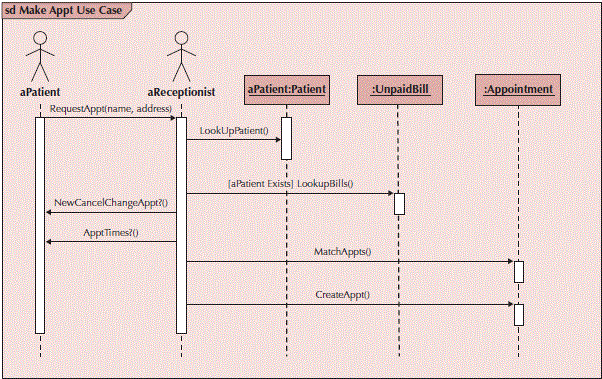
Sequence diagrams are Interaction diagrams that emphasize the time-ordered sequence of messages between objects in a system. They are particularly useful for understanding real-time specifications and complex use cases.
Communication Diagrams
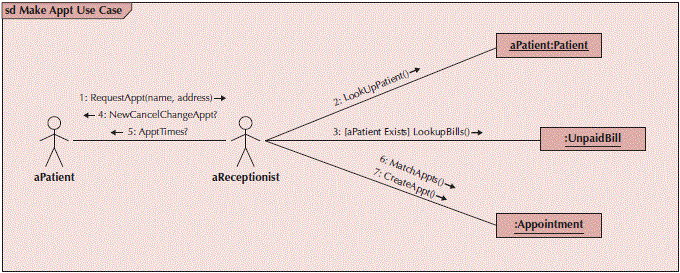
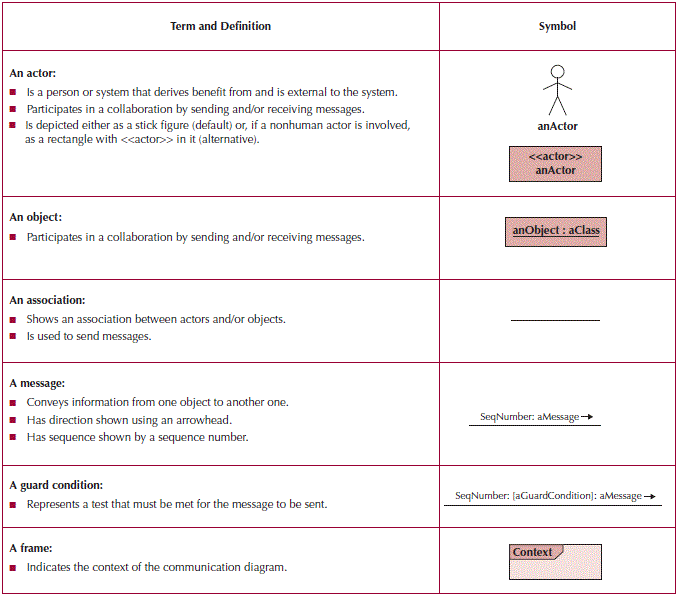
Communication diagrams focus on showing the relationships between objects and the messages they exchange. They emphasize the structural organization of objects rather than time ordering.
Behavioral State Machines
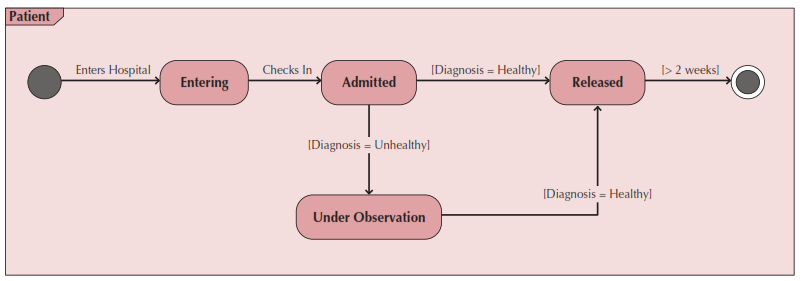
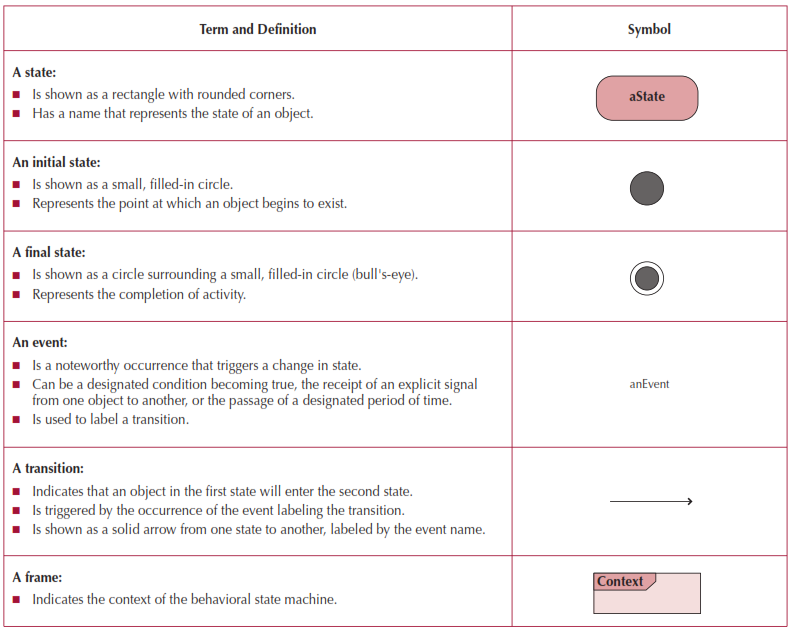
State machines show the different states an object can be in during its lifetime and how events trigger transitions between states. They are particularly useful for complex objects that have distinct operational states.
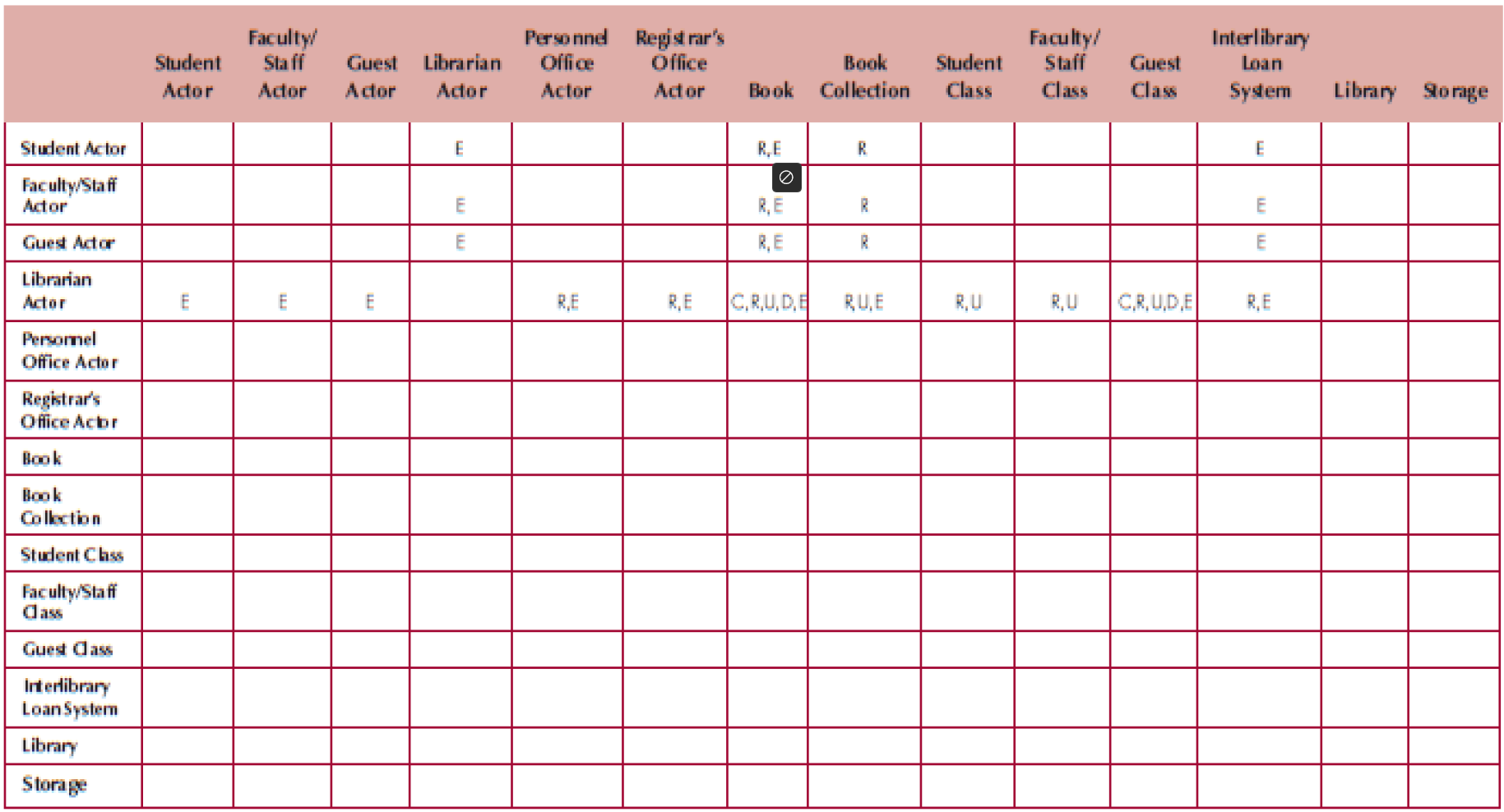
CRUDE Analysis
CRUDE (Create, Read, Update, Delete, Execute) analysis is a systematic way to identify and document object interactions.
- Create, can one object create another?
- Read, can one object read the attributes of another?
- Update, can one object change values in another?
- Delete, can one object delete another object?
- Execute, can one object execute the operations of another?